The Iran War Is Not Really About Iran
I get why Americans look at this war with Iran and scratch their heads. Sitting thousands of miles away, across an ocean, the Middle East feels like someone else's problem — a region locked in conflicts that have nothing to do with anything on their street.
But the truth is - this war is not really about Iran. Or at least not just about Iran.
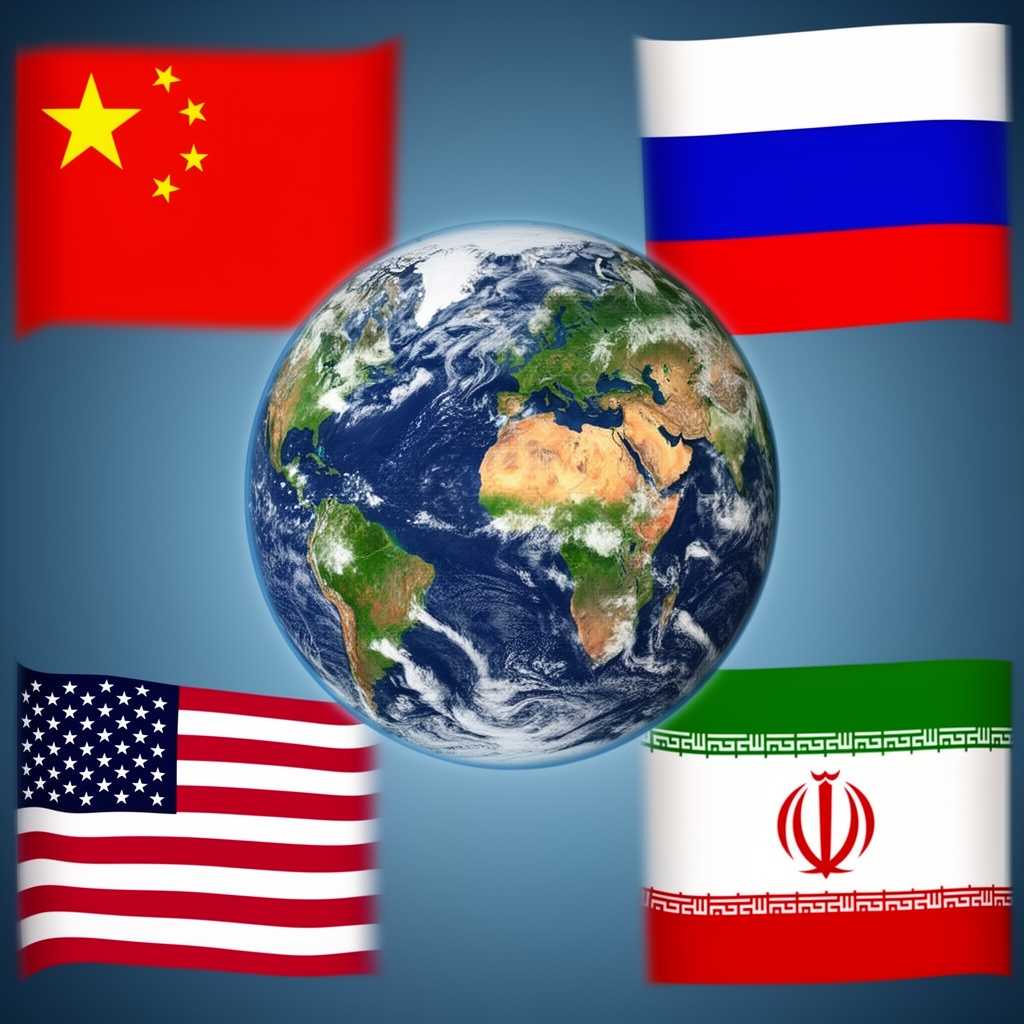
It's about China. It's about Russia. And it's about how the world sees the United States.
The West Blinked — And Everyone Noticed
You don't have to be a Trump supporter to acknowledge what happened to Western credibility over the past few years. The chaotic exit from Afghanistan in 2021 sent a message. The US Senate Foreign Relations Committee called it a "rushed and embarrassing retreat" that shattered allies' trust and gave both China and Russia a green light to test American resolve. Taiwan and the Baltic states were openly questioning whether the US would show up — and saying so publicly.
Then came Ukraine. Russia invaded. The West responded with sanctions and weapons shipments, but no boots on the ground, no red lines that held. To an adversary doing the math, the picture looked consistent: push hard enough, and the West hesitates.
That kind of hesitation is dangerous. Not because of anything happening in Kyiv or Kabul. Because of what it signals to Beijing.
The Taiwan Problem
Taiwan produces over 90% of the world's most advanced semiconductors. Not some. Nearly all of them. Nearly all of it flows through a single island that China considers its own territory — chips in phones, cars, military guidance systems, the servers running AI.
If China moves on Taiwan, the West doesn't just face a political crisis. It faces the potential loss of the most critical supply chain on the planet. That's not a trade dispute. It would be a structural crisis for how modern economies actually run.
So every time Beijing watches Washington hesitate, in Kabul, in Kyiv, it's running calculations. And a China that believes the US won't act is a China that might just act first.
Iran Is the Lever
Now look at Iran through that lens.
Around 90-95% of Iran's oil exports go to China, roughly 1.38 million barrels a day, generating nearly $47 billion a year for Tehran. Much of it moves covertly, through ship-to-ship transfers and rerouted through third countries to dodge sanctions. China is Iran's economic lifeline, and Iran is one of China's most important energy suppliers.
If the US manages to bring about a more pro-Western government in Iran, or simply disrupts that supply chain, it gains serious leverage over China's energy security. That's not a side effect of this war.
And separately from oil, the strike itself sends a message that goes beyond Iran. We are willing to act. After years of signaling otherwise, that matters.
A Big Gamble With No Guaranteed Payoff
I'll be the first to admit I don't know if this was the right call. Nobody does.
War is chaos. The last three US interventions in the Middle East all ended differently than planners expected. What looks like a decisive show of strength can spiral into a regional war that nobody planned for. The risks are real, and anyone claiming certainty about how this ends is either lying or not paying attention.
But treating this as a story about a rogue nuclear program or a regional grudge is the wrong frame. The decisions being made right now are about power, deterrence, and the shape of the world for the next few decades.
The chips in every device. The price of oil. What Washington signals right now shapes all of it.
You don't have to support this war to understand why it happened and understand that even though you live far away from the Middle East, what's going on out there has real implications on your future.